Which is Better for Privacy-Focused Use Cases?
Computer vision and LiDAR are often mentioned together as technologies that allow machines to “see” the world. While they serve a similar purpose, they work in very different ways and come with their own benefits and trade-offs.
One of the biggest differences between the two is how they handle personal data and privacy. As cities and companies deploy more AI-powered systems as part of real-time infrastructure in public spaces, this distinction matters more than ever.
This article breaks down how these technologies work, where each excels, and why LiDAR is the better choice for privacy-focused use cases.
What is Computer Vision?
Computer vision collects unstructured data from camera systems and uses algorithms to interpret images, video, or sensor data. It can recognize patterns, identify objects, and analyze visual scenes. When it comes to robotics and AI training, computer vision systems help respond to changes and give machines the ability to interpret and react to data. They are most proficient in high-speed and fast-changing environments where real-time decisions must be made, a key requirement for many infrastructure applications.
Computer vision excels in some areas, but it has its limitations. Cameras capture color in two dimensions, lacking depth. For instance, a large object placed far away from the camera can have the same number of pixels as a small object placed close to the camera. Fortunately, this depth perception is not required for simple computer vision tasks, such as classifying objects. However, the lack of depth is an obstacle for tasks that require precise detection of object position, size, or movement, such as crowd monitoring.
In real-world deployments, this limitation can lead to inaccurate spatial interpretation, particularly in crowded or complex environments. To compensate, computer vision systems often rely on additional cameras or data processing techniques, which can increase system complexity and data collection requirements.
Privacy Challenges with Computer Vision
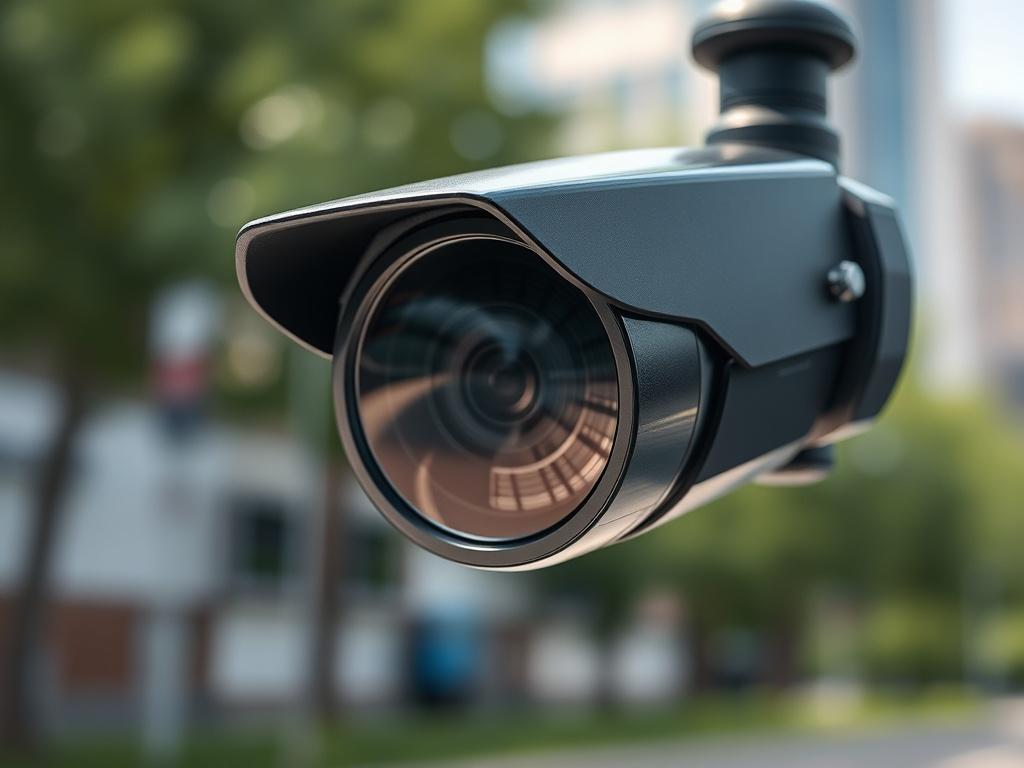
Cameras are designed to capture images that resemble what humans perceive in reality, which allows for the identification of individuals and other sensitive information. The use of cameras in facial recognition technology in particular raises concerns about privacy and data security. Policymakers around the world have taken action. For example, the General Data Protection Regulation (GDPR) in the European Union imposes strict guidelines on camera usage. While there are computer vision systems that value privacy, they have to be designed with this priority in mind.
What is LiDAR?
Short for Light Detection and Ranging, LiDAR is a remote sensing technology that uses laser pulses to measure distance. First, the LiDAR sensor emits rapid pulses of laser light into its surroundings. Those pulses bounce off surfaces and return to the sensor. Next, the system calculates distance by measuring how long it took each pulse to return, creating millions of data points. The result is a point cloud, a dense collection of 3D data coordinates that present a view of the nearby environment. Finally, the raw data goes through processing to become a comprehensive 3D model.
At Surge, the LiDAR systems we deploy use Class 1 certified lasers, the safest laser classification under international standards. These sensors operate using low-power, invisible infrared light that is safe for people and suitable for continuous use in public environments.
One advantage of LiDAR devices is that they can function perfectly in total darkness and direct sunlight while cameras cannot. This reliability makes LiDAR especially valuable for outdoor and around-the-clock applications, where lighting conditions are unpredictable. For infrastructure systems that must operate continuously, consistent performance is critical to maintaining accuracy and safety.
However, while 3D LiDAR can provide spatial data such as object size and distance, volume, and speed, it cannot detect color.
Why LiDAR is Privacy-Perserving
Unlike with camera systems, LiDAR devices generate point-cloud images that do not reveal personally identifiable information. These point clouds can show the presence, shape, and position of individuals without exposing facial features, clothing details, or other visual identifiers. As a result, LiDAR enables systems to understand their environment and respond to activity without collecting sensitive personal data. This makes LiDAR particularly well-suited for deployments in public or shared spaces, where minimizing privacy risks is a critical design consideration.
Surge’s Commitment to Privacy
Since the beginning, Surge has always prioritized privacy by processing data locally and anonymously. Rather than relying on centralized systems that collect and store sensitive information, this approach limits exposure by keeping raw data at the edge. Choosing LiDAR aligns naturally with this philosophy. Because LiDAR captures spatial data instead of detailed visual imagery, it allows systems to function effectively without identifying individuals. This reduces the risk of collecting unnecessary personal information while still enabling accurate environmental awareness. As a result, LiDAR supports Surge’s commitment to building intelligent, real-time infrastructure that respects privacy by design, making it the superior choice for people-centered deployments.
Conclusion
Both computer vision and LiDAR play important roles in modern AI systems, but they are not interchangeable. When privacy is a priority, LiDAR provides critical insights without capturing personal visual data.
As organizations deploy AI in real-world environments, choosing technologies that respect individual privacy from the start is essential. By selecting sensing technologies that align with privacy-by-design principles, organizations can build real-time infrastructure that is both effective and trustworthy over the long term.
Sources: